

|
What do you need to know about The Psychology of Customer Loyalty • The psychology of customer loyalty is the set of mental shortcuts that make people return to a brand without re-deciding every time. • Seven principles do most of the work: the goal gradient effect, endowed progress, loss aversion, reciprocity, status and recognition, variable rewards and habit formation. • Each one maps to a program mechanic you can design and test, such as a progress bar, a head-start bonus or an elite tier. • Points alone rarely create loyalty. Psychology explains why a reward feels worth chasing. • Use these principles to help customers, not trap them. Loyalty built on tricks breaks the moment a competitor offers something better. |
The psychology of customer loyalty explains why people come back to the same brand again and again, often without consciously deciding to. Customer loyalty psychology isn't about clever discounts. It's about how people feel progress, fear loss, return favors and build routines.
Here's my view after 25+ years designing programs for brands like Marriott, Hyatt, Continental Airlines and IKEA: most loyalty programs fail because they're built like accounting systems, not around how people actually think. They count points accurately and motivate nobody.
The good news is that psychology is well studied. You don't have to guess.
What is the psychology of customer loyalty?
The psychology of customer loyalty is the study of the mental and emotional forces that lead customers to repeatedly choose one brand over its alternatives. It covers motivation, memory, emotion and habit.
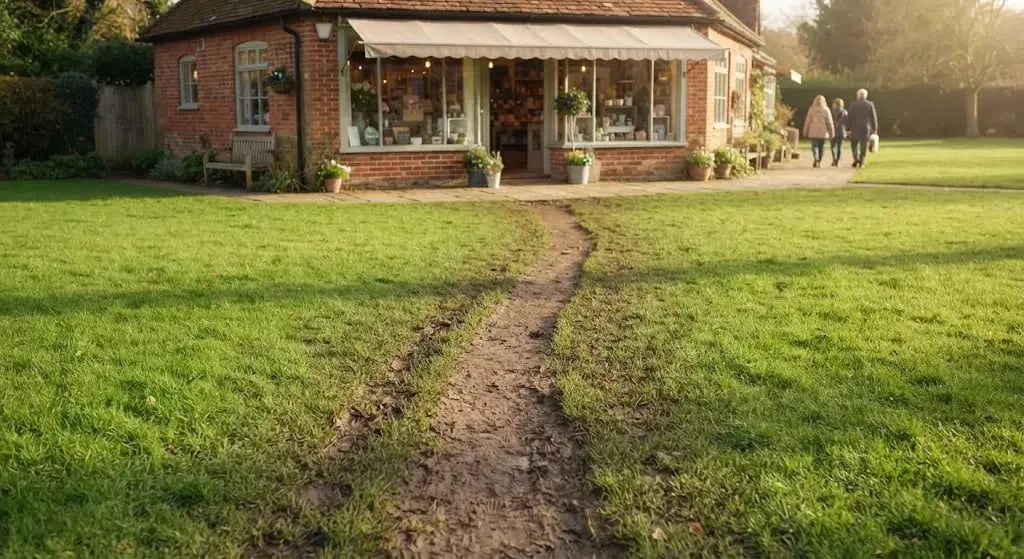
Think of it like a footpath across a lawn. The first few people pick a route almost at random. After enough trips, the worn path becomes the obvious way to go, and nobody thinks about it anymore. Loyalty works the same way: early choices shape the path, and repetition makes it automatic.
Why are customers loyal?
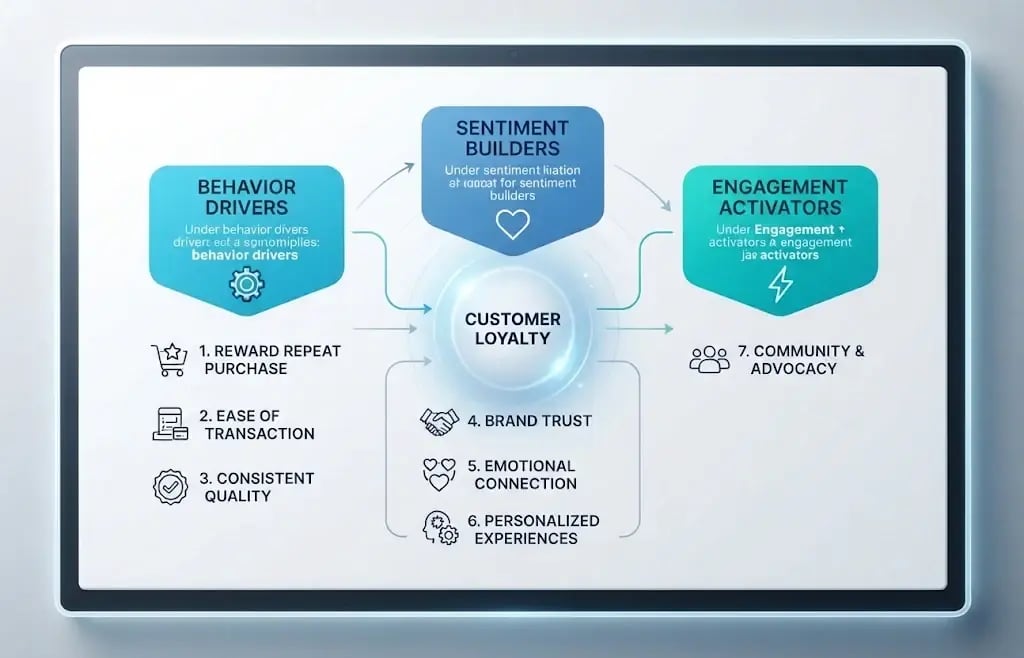
Customers are loyal for three broad reasons: something makes the behavior worth repeating, something makes them feel good about the brand, and something keeps them involved between purchases. I call these the three LoyaltyLevers.
• Behavior Drivers: incentives that change what customers do, like earning toward a reward.
• Sentiment Builders: experiences that change how customers feel, like recognition and surprise.
• Engagement Activators: touchpoints that keep customers interacting, like challenges and personalized content.
Every psychological principle in this article feeds one of those levers. The table below shows where each one fits.
|
Principle |
What it means |
Lever it powers |
Program example |
|
Goal gradient effect |
Effort speeds up near a goal |
Behavior Drivers |
Progress bar to the next reward |
|
Endowed progress effect |
A head start increases completion |
Behavior Drivers |
Bonus points at sign-up |
|
Loss aversion |
Losses feel bigger than gains |
Behavior Drivers |
Tier status you can lose |
|
Reciprocity |
People return favors |
Sentiment Builders |
Unexpected welcome gift |
|
Status and recognition |
People value being seen |
Sentiment Builders |
Elite tiers, named service |
|
Variable rewards |
Uncertain rewards hold attention |
Engagement Activators |
Surprise bonuses, games |
|
Habit formation |
Repetition becomes routine |
Engagement Activators |
Weekly offers tied to a routine |
What drives customer loyalty, psychologically?
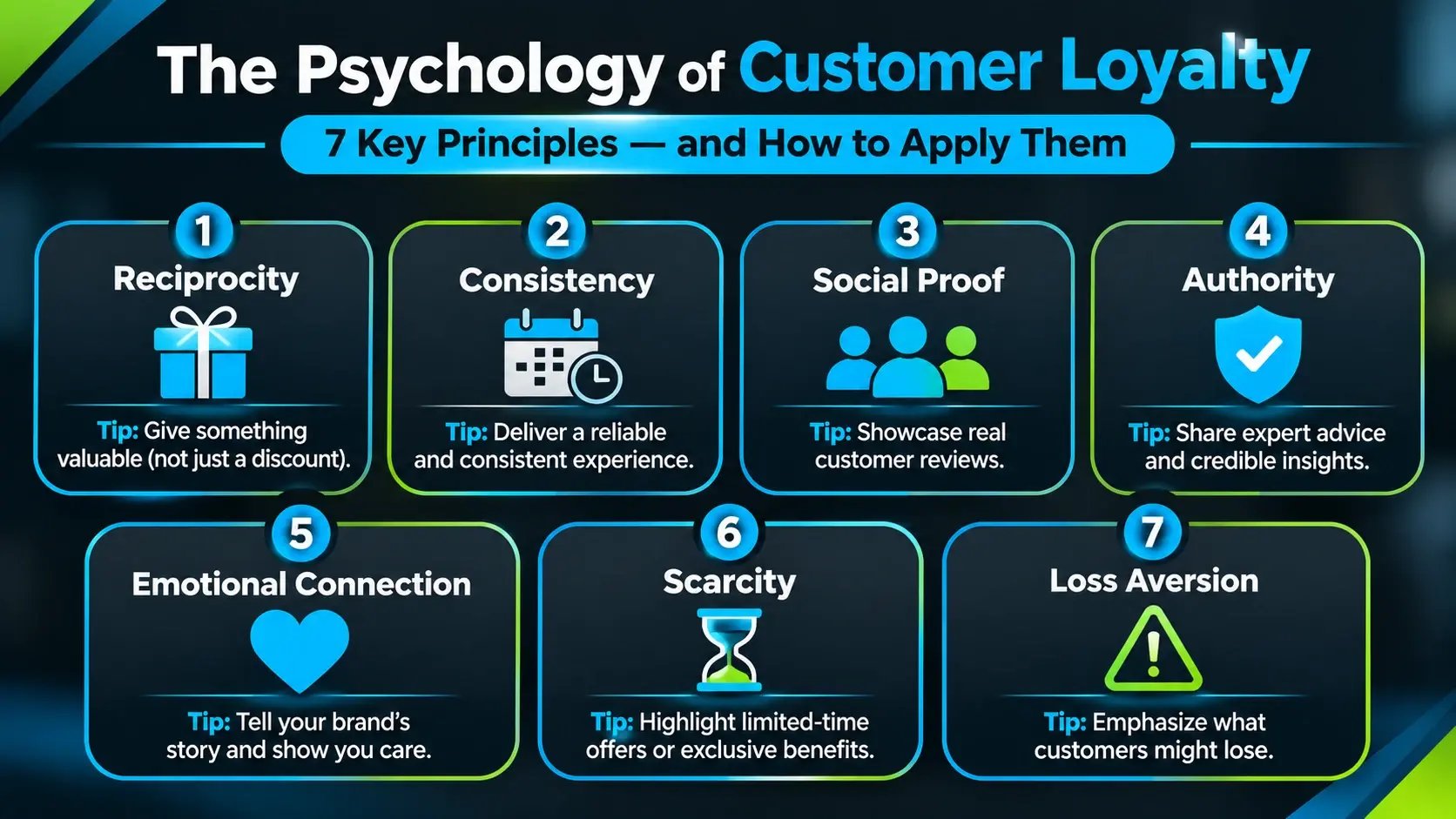
What drives customer loyalty is a small group of well-documented biases and motivations. Most consumer behavior loyalty research points to the same seven. Here's how each one works, the evidence behind it, and how to use it.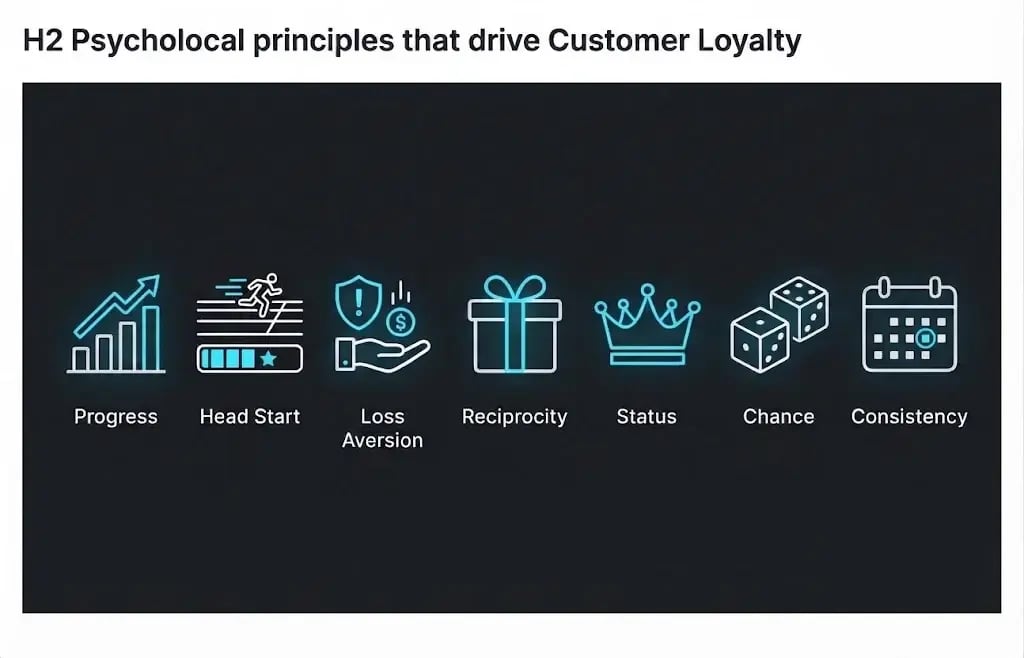
Goal gradient effect: customers speed up near the finish line
The goal gradient effect is the tendency to work harder and faster as you get closer to a goal. Runners sprint the last 100 meters, not the first.
Columbia researchers Ran Kivetz, Oleg Urminsky and Yuhuang Zheng showed this in a real café loyalty program. In their 2006 Journal of Marketing Research study, customers bought coffee more often the closer they got to a free drink.
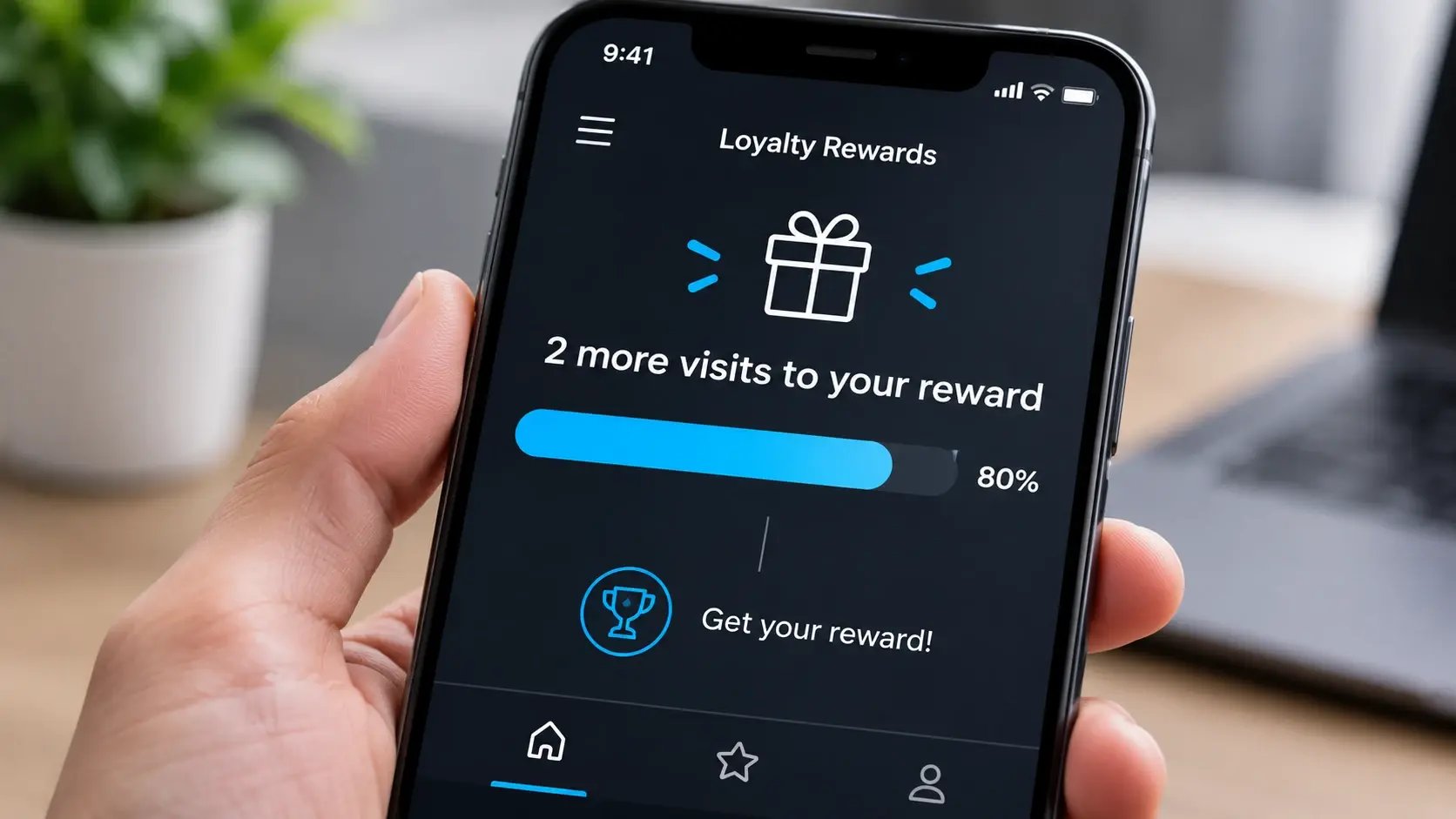
The practical takeaway: make distance to the reward visible. A progress bar that says "2 more visits to your free coffee" does more work than a points balance of 840.
Endowed progress effect: a head start makes people finish
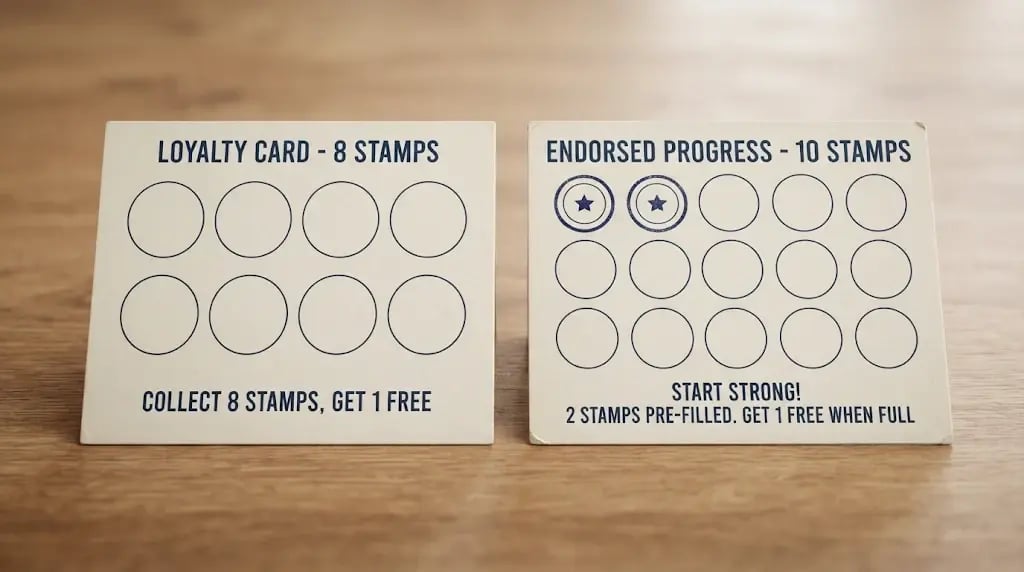
The endowed progress effect is when giving people artificial progress toward a goal makes them more likely to complete it. A task that feels started gets finished. A task that feels unstarted gets ignored.
The best-known proof is a car wash study by Joseph Nunes and Xavier Drèze, published in the Journal of Consumer Research in 2006.
One group got an eight-stamp card. Another got a ten-stamp card with two stamps already filled. Both needed eight washes.
The head-start card won clearly: 34% of those customers completed it, versus 19% for the plain card, according to the study summary on Changing Minds.
Same effort, nearly double the completion.
The Kivetz study found the same thing with coffee cards. A 12-stamp card with two bonus stamps was completed faster than a plain 10-stamp card. So give new members bonus points at sign-up, and show them as progress already made.
Loss aversion: losing feels worse than winning feels good
Loss aversion is the tendency to feel the pain of a loss more strongly than the pleasure of an equal gain. Losing $50 stings more than finding $50 feels good.
Amos Tversky and Daniel Kahneman described this in Prospect Theory, published in Econometrica in March 1979. Their research showed people judge outcomes as gains and losses from a reference point, and the loss side weighs more.
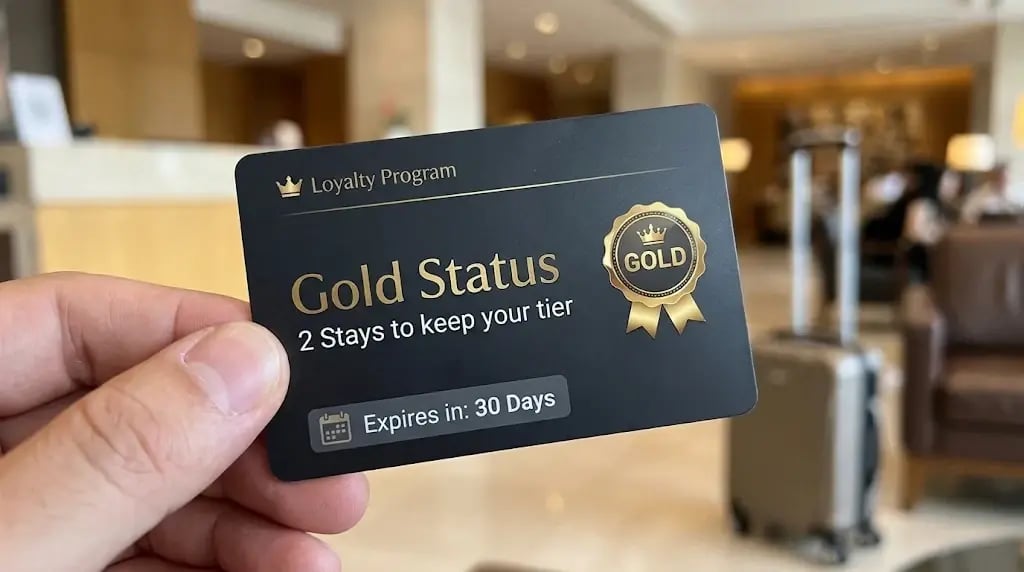
Loss aversion marketing in loyalty usually shows up as tier status. Airline programs are the textbook case. Picture a frequent flyer two flights short of keeping elite status in December: the fear of dropping a tier can drive those flights more than any bonus offer.
Be careful here, though. Expiring points can motivate a purchase, but they can also make members feel cheated. Use loss framing on status, not on points customers already earned.
Reciprocity: give first and customers give back
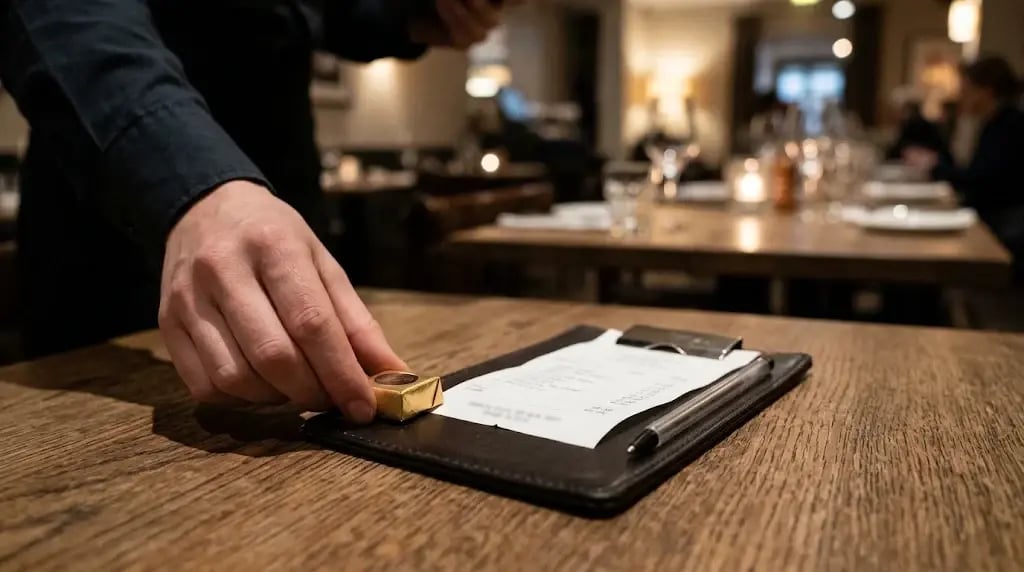
Reciprocity is the instinct to return a favor. When someone gives people something unexpected, they feel a pull to give something back.
A restaurant study by Strohmetz, Rind, Fisher and Lynn, published in the Journal of Applied Social Psychology in 2002, found diners tipped more when servers gave them candy with the check. The authors argued reciprocity explained the effect better than good mood did.
Reciprocity marketing works best when the gift feels personal and unconditional. A free birthday treat with no purchase required builds goodwill. A "gift" that only unlocks after spending $100 is a promotion, and customers know it.
Status and recognition: people stay where they are seen
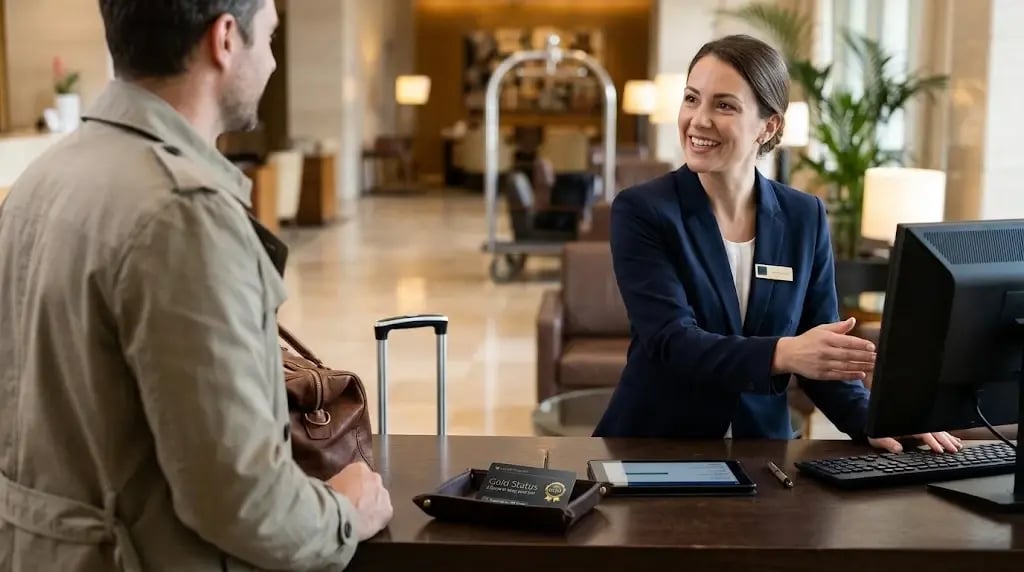
Status is the desire to be seen as valued, and recognition is the act of showing it. Customers stay where they feel known.
Picture a hotel guest who walks in and is greeted by name, with their usual room preference already noted. No points changed hands, yet that moment builds more attachment than a free night. A competitor can't copy it with a discount.
Tiers are the classic tool here, but they only work when the higher levels feel meaningfully different.
I cover the design trade-offs in do tiered loyalty programs work?
Variable rewards: surprise keeps attention alive
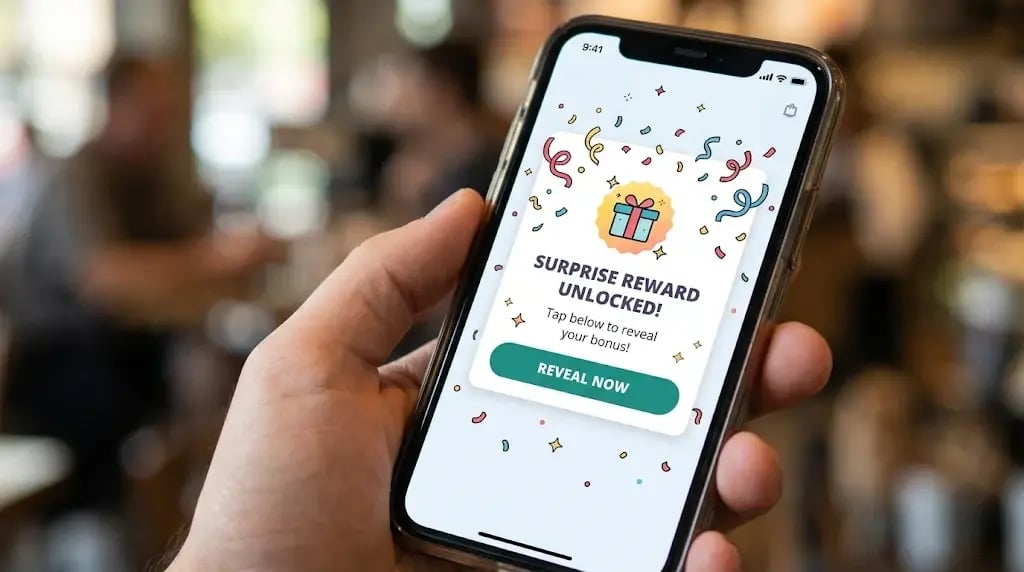
Variable rewards are rewards that arrive unpredictably, in timing or size. The brain pays more attention to an uncertain payoff than a guaranteed one.
Think of a fishing trip. If every cast caught a fish, it would get boring fast. The uncertainty is part of the pull.
In loyalty programs, this means surprise bonuses, mystery offers and game mechanics.
Two of my posts show this in practice:
• using surprise and delight, on how brands scale unexpected rewards
• Google Local Guides breakdown, on game mechanics done well
Habit formation: repetition turns choice into routine
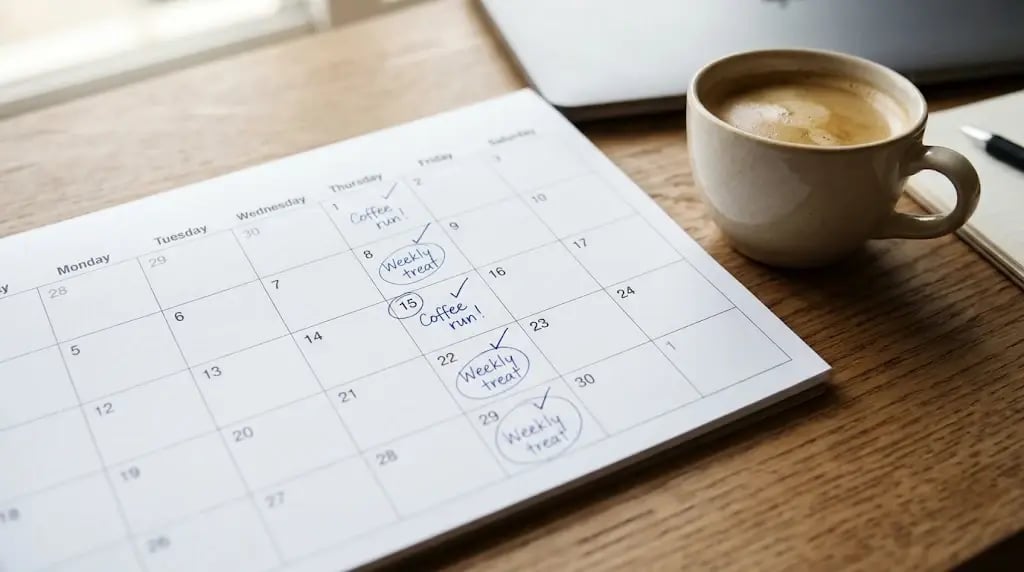
Habit formation is the process by which a repeated behavior becomes automatic. Once it's a habit, the customer stops comparing options.
A study led by Phillippa Lally at University College London found it takes an average of 66 days to form a new habit, as UCL reported in August 2009.
Missing one day didn't derail the process much, but very inconsistent people didn't form habits at all.
For loyalty design, that means consistency beats intensity. A weekly offer tied to a real routine, like Friday lunch, builds more habit than a big one-off promotion.
How does behavioral economics shape loyalty programs?
Behavioral economics is the study of how real people make decisions, including the predictable ways they depart from pure logic. It's the science that ties all seven principles together.
Richard Thaler won the Nobel Prize in Economic Sciences on 9 October 2017 for his contributions to behavioural economics.
He also coined the term "nudge."
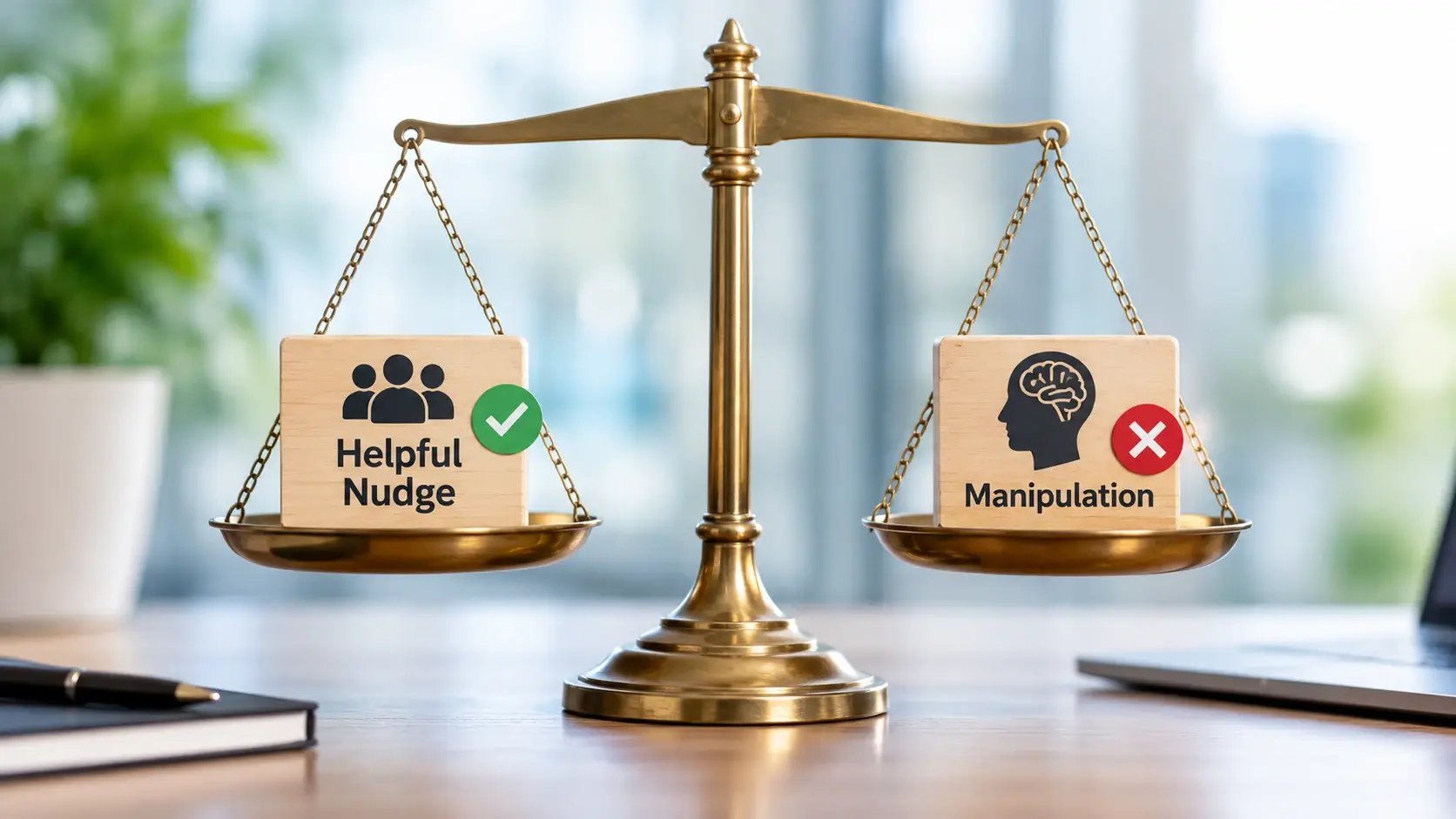
Nudge theory says small changes in how a choice is presented can shift behavior without removing options. A default opt-in, a progress bar or a well-timed reminder are all nudges.
That's the core idea behind behavioral economics loyalty programs: design the path so the behavior you want is the easiest one to take. The reward is only part of it. Presentation, timing and framing do the rest.
How do you apply customer loyalty psychology to your program?
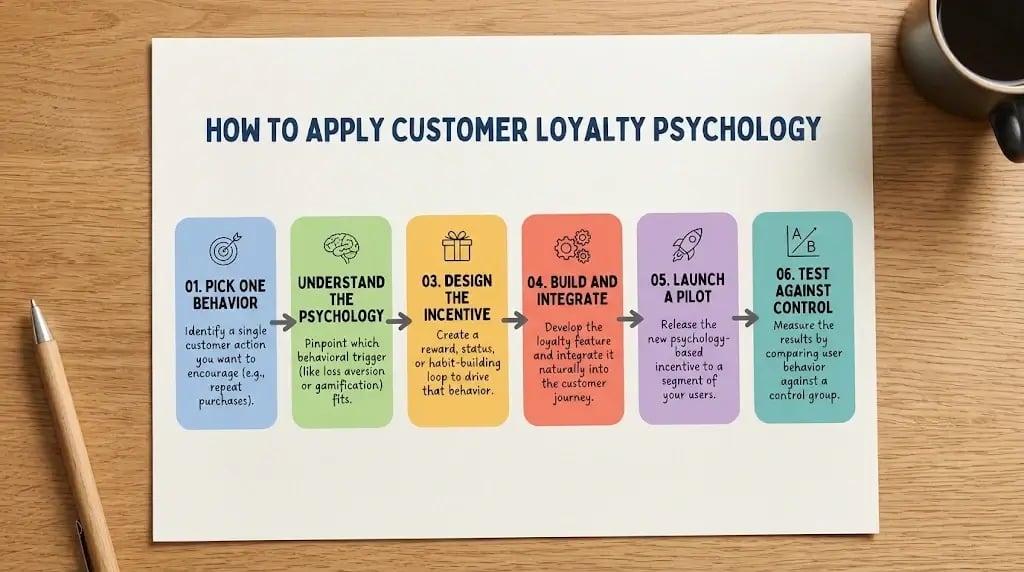
Apply customer loyalty psychology by matching each business goal to one principle, then testing whether it changes behavior. Here's the process I use with clients.
1. Pick one behavior to change. More visits, bigger baskets or trying a new category. One goal per mechanic.
2. Choose the principle that fits. Use the goal gradient for frequency, endowed progress for onboarding and status for your top spenders.
3. Make progress visible. Show distance to the next reward in the app, on receipts and in emails.
4. Give before you ask. Add a no-strings welcome reward to start reciprocity early.
5. Design for routine. Tie offers to days and moments customers already have.
6. Test against a control group. Hold out a group that doesn't get the mechanic, so you know what actually caused the lift.
Measuring step six properly matters more than most teams think. My balanced scorecard approach to measuring behavior changes walks through it.
|
Want to know which principles your program is missing? Book a complimentary consultation and I'll review your program design with you. |
Where does loyalty psychology cross the line?
Loyalty psychology crosses the line when it works against the customer instead of for them. Confusing expiry rules, hidden terms and fake urgency all fall into that category.
Here's my rule of thumb: if a customer would feel tricked once they understood the mechanic, don't use it. Trickery might lift next month's numbers. It destroys the sentiment that keeps people around for years.
One honest caveat: most of the research above comes from specific settings like cafés, car washes and restaurants. The principles transfer well, but the size of the effect in your category won't be the same. That's why testing matters.
Frequently asked questions
Why do customers stay loyal to a brand?
Customers stay loyal because a brand makes repeat buying easy, rewarding and personally meaningful. Practical drivers include convenience and rewards progress.
Emotional drivers include recognition, trust and a sense of belonging. Over time, repetition turns the choice into a habit, so customers stop comparing alternatives. The strongest loyalty combines all three, which is why the most durable programs mix rewards with recognition and regular engagement.
Do loyalty programs actually change customer behavior?
Yes, when they're designed around how people think. The coffee card studies showed customers buying more often as they approached a reward, and head-start cards raised completion.
Programs that only hand out points on every purchase often reward behavior that would have happened anyway. The difference is design: clear goals, visible progress and a control group to prove the lift is real.
What is the endowed progress effect in simple terms?
The endowed progress effect means people are more likely to finish something if it already feels started. Give a customer two free stamps on a ten-stamp card and they're more likely to complete it than someone with a blank eight-stamp card, even though both need eight purchases.
It's why sign-up bonuses work best when shown as progress toward a reward.
Is using psychology in loyalty programs manipulative?
It doesn't have to be. Psychology is manipulative when it hides the real terms or pushes people into choices they'd regret.
It's ethical when it makes a good outcome easier, like showing progress clearly or rewarding a habit the customer wants. A simple test: would the customer feel fine if they fully understood how the mechanic works? If not, change it.
Which loyalty psychology principle should I start with?
Start with the goal gradient and endowed progress effects. They're the easiest to apply and the best documented.
Show members how close they are to a reward and give new members a head start at sign-up. Both changes are cheap to build and easy to test. Add status, reciprocity and variable rewards once the basics are working.
How long does it take to build a customer habit?
Research from University College London found habits take an average of 66 days to form, though it varies by person and behavior. Consistency matters more than intensity. A small weekly offer that fits an existing routine builds habit faster than an occasional large promotion, because the customer repeats the same action in the same context.
The bottom line
• Customer loyalty psychology is about progress, loss, reciprocity, status, surprise and routine.
• Show progress, give a head start and make status worth keeping.
• Give before you ask, and recognize your best customers personally.
• Build routines with consistent, well-timed offers.
• Test every mechanic against a control group, and never trick members.
If you want the wider picture, start with my complete guide to customer loyalty programs.
And if you'd like a second opinion on your own program, get in touch with LoyaltyLevers.
About the author: Phil Hussey is the Principal Consultant at LoyaltyLevers. Over 25+ years he has worked as a loyalty consultant and program operator for brands including Marriott, Disney, Hyatt, Continental Airlines, DIRECTV, JCPenney, IKEA, Jeep and Sanofi. He created the LoyaltyLevers framework for loyalty program design. Connect with Phil on LinkedIn.
Comments